

Cleaning solar panels is one of the simplest and most effective ways to maintain maximum energy production. In Pakistan, where dust, pollution, bird droppings, pollen, and industrial emissions accumulate rapidly on solar panels, regular cleaning is essential to achieve optimum system performance.
However, solar panel cleaning should never be treated as an ordinary cleaning job. Every year, accidents occur due to falls from rooftops, electric shock, damaged panels, cracked glass, improper cleaning techniques, and water entering electrical components. A poorly executed cleaning process can not only reduce the lifespan of your solar system but also put lives at risk.
Do You Have a Professional Solar Panel Wash Team??
Whether you own a residential, commercial, or industrial solar installation, following proper safety procedures protects both your investment and the people performing the maintenance.
This comprehensive guide will explain everything you need to know.
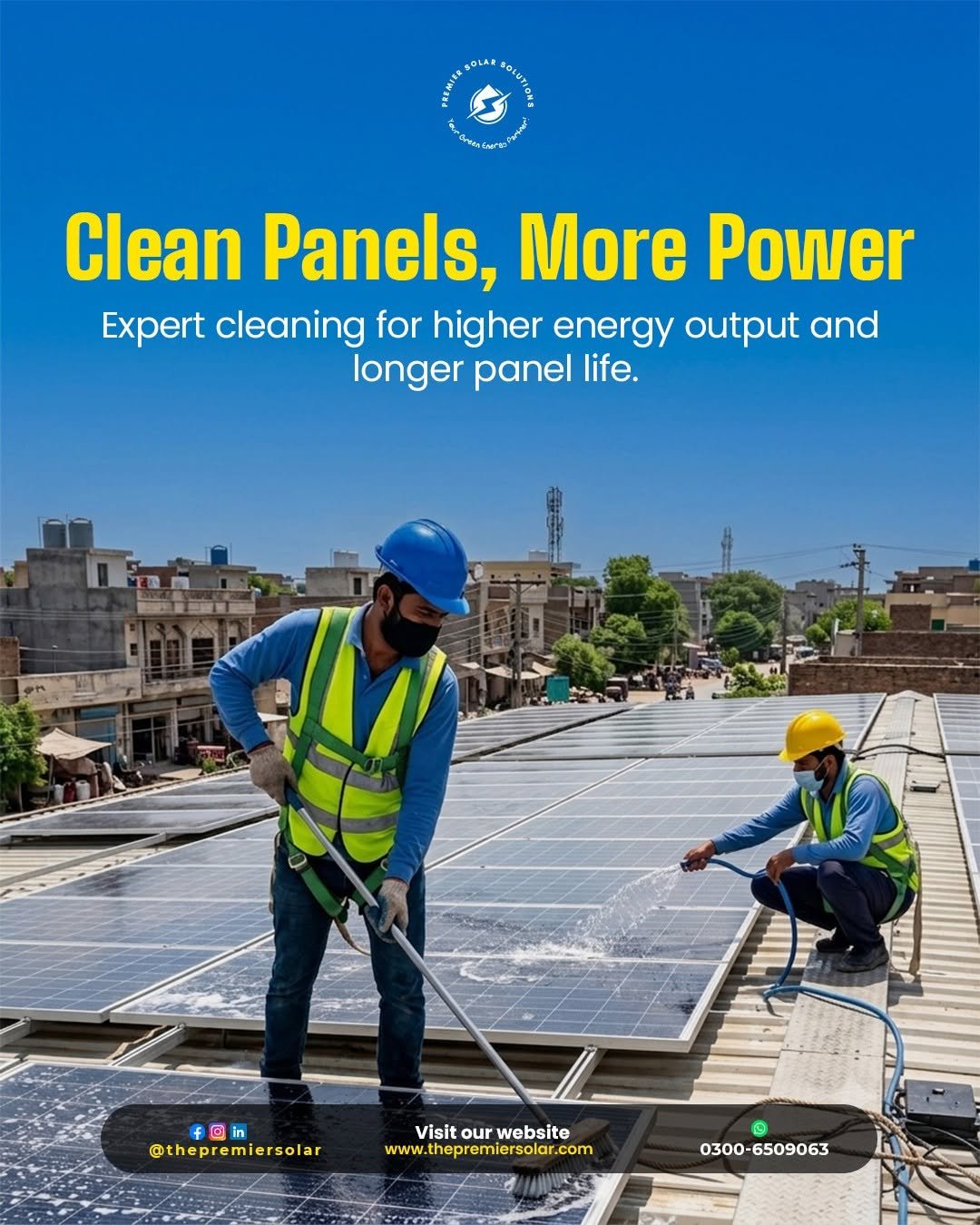
Why Solar Panel Cleaning is Important
Solar panels generate electricity by converting sunlight into usable energy. When dirt accumulates on the glass surface, less sunlight reaches the photovoltaic cells, reducing electricity generation.
Common contaminants include:
- Dust
- Bird droppings
- Tree leaves
- Mud deposits
- Industrial pollution
- Cement dust
- Smoke residue
- Pollen
- Salt deposits (coastal areas)
Regular cleaning helps maintain optimum system performance and reduces long-term efficiency losses.
Frequency of Cleaning Solar Panels?
The cleaning schedule depends on the installation environment.
Residential Solar Systems
Recommended frequency:
- Twice or three times a month in dusty areas such as Lahore and surrounding regions.
- Additional cleaning after dust storms or prolonged dry weather.
Commercial Buildings
Recommended frequency:
- Twice or three times a month, especially for facilities with large rooftop systems and higher exposure to dust or pollution.
Industrial Solar Plants
Cleaning frequency should be determined by:
- Dust accumulation
- Industrial emissions
- Manufacturing processes
- Local weather conditions
- System performance monitoring
Facilities near cement plants, textile industries, steel manufacturing, or high-traffic roads may require more frequent cleaning.
Best Time to Clean Solar Panels
Cleaning should be performed:
- Early morning
- Evening or late afternoon
- During cooler weather
Avoid cleaning during peak sunlight hours because:
- Panels become extremely hot.
- Cold water on hot glass can create thermal stress.
- Rapid evaporation leaves mineral deposits.
- Workers are exposed to excessive heat.
11 Essential Safety Measures Before Panel Cleaning
Before starting any cleaning work, a complete safety assessment should be carried out.
Inspect weather conditions: Avoid cleaning during rain, thunderstorms, strong winds, or lightning.
Check roof safety: Ensure the roof surface is stable, dry, and free from slipping hazards.
Inspect the solar system: Look for damaged panels, loose wiring, cracked glass, exposed conductors, or broken mounting hardware.
Restrict access: Keep children, unauthorized persons, and pets away from the work area.
Personal Protective Equipment (PPE)
Every technician should wear appropriate safety equipment.
Recommended PPE includes:
- Safety helmet
- Non-slip safety shoes
- Safety gloves
- Eye protection
- High-visibility clothing (commercial and industrial sites)
- Full-body safety harness when working at height
Proper PPE significantly reduces the risk of falls and workplace injuries.
Working at Heights
Most residential and commercial solar systems are installed on rooftops.
Important safety precautions include:
- Use certified safety harnesses.
- Secure lifelines to approved anchor points.
- Never work alone.
- Use stable ladders positioned correctly.
- Avoid standing on weak roofing materials.
- Maintain safe movement around panel arrays.
For industrial projects, fall protection systems should comply with workplace safety regulations.
Electrical Safety During Cleaning
Although the cleaning process focuses on the panel surface, electrical hazards remain present because solar panels generate electricity whenever exposed to sunlight.
Important precautions include:
Do not spray water directly into:
- Inverters
- Junction boxes
- Cable glands
- Disconnect switches
- Distribution boards
- Battery cabinets
Inspect for electrical damage before cleaning:
- Loose connectors
- Exposed wiring
- Burn marks
- Damaged insulation
- Water ingress
If electrical damage is observed, cleaning should stop until qualified technicians inspect the system.
Use the Correct Cleaning Equipment
Using improper tools is one of the most common causes of panel damage.
Recommended equipment:
- Soft microfiber cloth
- Soft sponge
- Soft-bristle brush
- Extension cleaning pole
- Deionized or clean water where available
- Low-pressure water supply
Avoid:
- Wire brushes
- Steel wool
- Abrasive pads
- Pressure washers directed at panel edges or electrical connections
- Sharp tools
- Harsh scraping equipment
Avoid Harsh Chemicals
Solar panels should only be cleaned using manufacturer-approved methods.
Do not use:
- Acidic cleaners
- Strong detergents
- Bleach
- Solvents
- Abrasive chemicals
- Petroleum-based products
These substances may damage:
- Anti-reflective coatings
- Glass surfaces
- Rubber seals
- Aluminum frames
Clean water is often sufficient for routine maintenance. If additional cleaning agents are required, use products specifically recommended for photovoltaic systems.
Never Walk on Solar Panels
Solar panels are engineered to withstand environmental loads—not human weight.
Walking on panels can cause:
- Microcracks
- Broken glass
- Cell damage
- Frame distortion
- Reduced power generation
- Warranty issues
Technicians should always work from designated walkways or roof access areas.
Protect the Mounting Structure
Cleaning provides an excellent opportunity to inspect the mounting structure installation.
Check for:
- Loose nuts and bolts
- Rust formation
- Corrosion
- Bent mounting rails
- Loose panel clamps
- Damaged roof anchors
Addressing these issues early helps prevent future structural problems.
Inspect Cable Management
During cleaning, examine:
- Cable ties
- Cable clips
- UV-resistant conduits
- MC4 connectors
- Junction boxes
- Cable insulation
Loose or damaged cables should be repaired by qualified technicians.
Book a professional and safe solar panel cleaning service today.
Contact UsInverter Protection During Cleaning
The inverter should remain protected throughout the cleaning process.
Important precautions:
- Prevent water from entering ventilation openings.
- Avoid directing water toward the inverter.
- Keep the surrounding drainage clear.
- Ensure cable entries remain properly sealed.
- Maintain adequate ventilation after cleaning.
Hybrid inverters and battery systems should never be washed or exposed to standing water.
Check Earthing and Grounding
Cleaning visits also provide an opportunity to inspect:
- Earthing conductors
- Grounding clamps
- Bonding connections
- Corrosion at earth terminals
Proper grounding remains one of the most important safety features of every solar installation.
Inspect for Bird Nests and Pest Activity
Birds and rodents can damage solar installations.
Look for:
- Bird nests beneath panels
- Rodent damage
- Chewed cables
- Insect infestations
- Accumulated nesting material
Removing nests and installing appropriate bird protection helps prevent future damage.
Safety Measures After Cleaning
Once cleaning is complete:
Perform a visual inspection: Confirm no tools, debris, or loose components remain on the roof.
Verify panel stability: Ensure clamps and fasteners are secure.
Inspect electrical equipment: Check that cables and connectors remain intact.
Review inverter monitoring: Confirm the system is operating normally and generating expected power.
Document maintenance: Keeping a maintenance log helps identify recurring issues and supports preventive maintenance planning.
Common Mistakes to Avoid
| Mistake | Possible Consequence |
|---|---|
| Cleaning during peak sunlight | Thermal stress and worker heat exposure |
| Walking on solar panels | Cracked cells and reduced performance |
| Using pressure washers incorrectly | Water ingress and damaged seals |
| Using abrasive tools | Scratched glass and coating damage |
| Cleaning during storms | Increased risk of slips and electrical hazards |
| Ignoring loose mounting hardware | Structural instability |
| Spraying water on electrical equipment | Equipment damage |
| Cleaning without fall protection | Serious injury risk |
Residential vs Professional Solar Panel Cleaning
| Feature | DIY Cleaning | Professional Solar Cleaning |
|---|---|---|
| Roof safety assessment | Limited | Comprehensive |
| Fall protection | Often unavailable | Standard practice |
| Panel inspection | Basic | Detailed |
| Structure inspection | Usually skipped | Included |
| Electrical safety checks | Limited | Professional |
| Performance evaluation | Minimal | Comprehensive |
| Maintenance reporting | No | Yes |
| Long-term system care | Basic | Preventive maintenance approach |
Why Professional Solar Cleaning is Recommended
Professional solar maintenance teams provide more than cleaning.
A comprehensive service includes:
- Safe rooftop access
- Panel cleaning
- Structural inspection
- Mounting system review
- Nut and bolt tightening
- Corrosion inspection
- Cable management assessment
- Earthing verification
- Inverter inspection
- Performance monitoring
- Preventive maintenance recommendations
This approach helps maximize energy production while reducing the risk of future failures.
Why Choose Premier Solar Solutions?
At Premier Solar Solutions, our panel cleaning service is designed to protect both your investment and your safety.
Our maintenance services include:
- Safe solar panel cleaning
- Residential, commercial, and industrial maintenance
- Structural inspections
- Mounting system evaluation
- Nut and bolt tightening
- Corrosion assessment
- Cable management inspection
- Earthing and grounding checks
- Inverter inspection
- Performance monitoring
- Preventive maintenance planning
Our experienced technicians follow industry best practices to ensure your solar system continues operating safely and efficiently throughout the year.
Frequently Asked Questions
Can I clean solar panels myself?
Yes, if the system is safely accessible and appropriate safety precautions are followed. For rooftop, commercial, or industrial systems, professional cleaning is generally recommended due to the risks associated with working at height and around electrical equipment.
Should I turn off my solar system before cleaning?
Cleaning procedures vary depending on the system design and maintenance scope. If any work involves electrical components or there is uncertainty, consult your installer or have the cleaning performed by qualified technicians.
Can rain clean solar panels completely?
No. Rain removes some loose dust but often leaves mud residue, bird droppings, and other contaminants that still require manual cleaning.
Will regular cleaning improve electricity generation?
Yes. Removing accumulated dirt allows more sunlight to reach the solar cells, helping maintain optimal energy production, particularly in dusty environments.
Final Thoughts
Solar panel cleaning is an essential part of maintaining a high-performing solar system, but it should always be carried out with safety as the top priority. Proper planning, fall protection, suitable cleaning tools, electrical awareness, and routine inspections not only protect workers but also extend the life of your solar investment.
Whether you own a residential rooftop system or a large commercial or industrial solar plant, combining safe cleaning practices with preventive maintenance helps maximize energy production and reduce long-term operating costs.
At Premier Solar Solutions, we provide professional solar panel cleaning and maintenance services tailored to Pakistan's environmental conditions. From safe cleaning procedures and structural inspections to electrical safety checks and performance optimization, our team ensures your solar system remains reliable, efficient, and protected throughout the year.